GEOTECHNICAL ENGINEERING1
ASHFORD

Geotechnical Engineering in Ashford

Knowledgeable. Thorough. Resourceful.

LEARN MORE

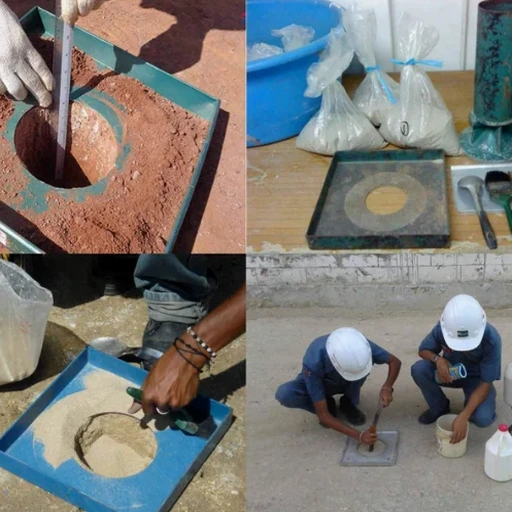
In Ashford, we often see foundation designs that underestimate the variability of the Weald Clay. A proper soil mechanics study here has to account for the stiff, fissured clay that swells in winter and shrinks in summer. The Hythe Beds to the north add another layer of complexity with sandy layers and chert bands. Our laboratory handles both undisturbed and bulk samples from the Ashford area. We run classification and strength tests under BS 5930:2015 procedures. For projects near the Stour, soft alluvium requires in-situ permeability assessments before any earthworks. The data we produce is not generic; it is specific to the Ashford strata, which helps structural engineers refine bearing capacity and settlement calculations.

The fissures in the Ashford Weald Clay control the mass permeability more than the intact matrix does. Our tests quantify that.
Geotechnical Engineering in Ashford
Technical reference — Ashford

Our service areas

Local geology


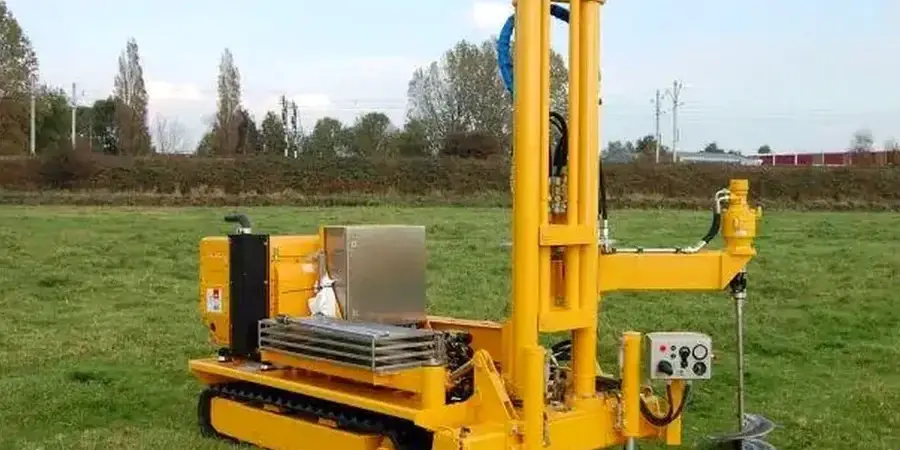
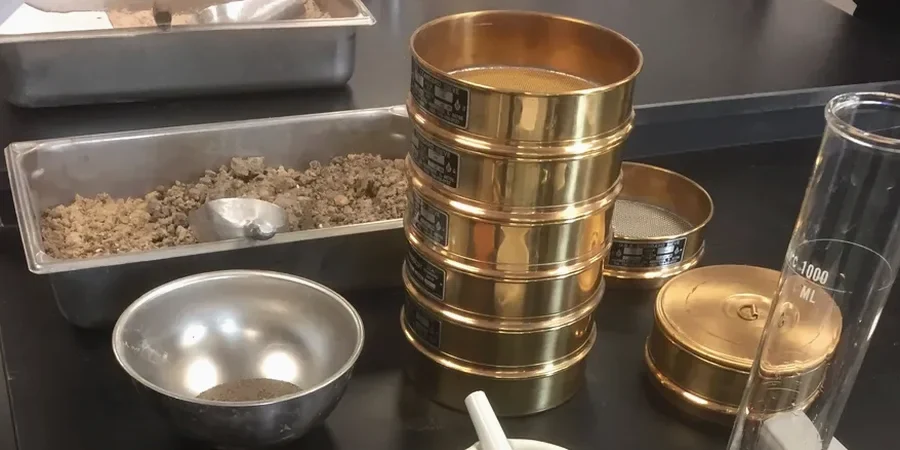
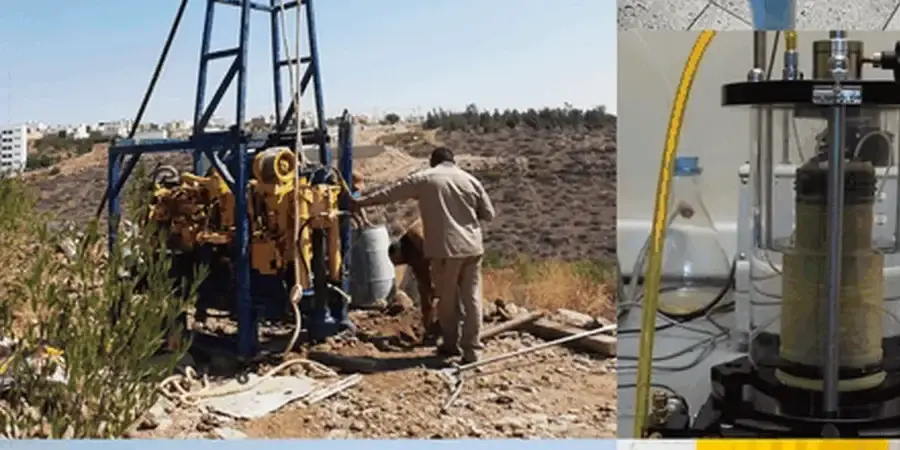
A soil mechanics study in our Ashford facility starts with the extrusion of Shelby tubes right after the rig returns. We log the moisture condition and check for desiccation cracks common in the local Gault and Weald formations. The triaxial cell is then set for multi-stage consolidated-undrained tests following BS EN 1997-2. For granular material from the Folkestone Beds, we dry and sieve the entire sample through the 75 mm to 63-micron stack. The hydrometer reading comes after a 24-hour sedimentation period. Data is cross-checked with grain-size analysis to confirm the fines content. Every result is correlated against the Ashford borehole logs to ensure the lab curve matches the field description. We report effective stress parameters and undrained shear strength profiles the same week.

Standards used

BS 5930:2015 - Code of practice for ground investigations, BS EN 1997-2:2007 - Eurocode 7: Geotechnical design, ground investigation and testing, BS 1377-2:1990 - Classification tests, BS 1377-7:1990 - Shear strength tests (total stress), BS 1377-5:1990 - Compressibility, permeability and durability tests

Need a geotechnical assessment?

Reply within 24h.

Email: contact@geotechnical-engineering1.com

Watch how it works

Why choose us

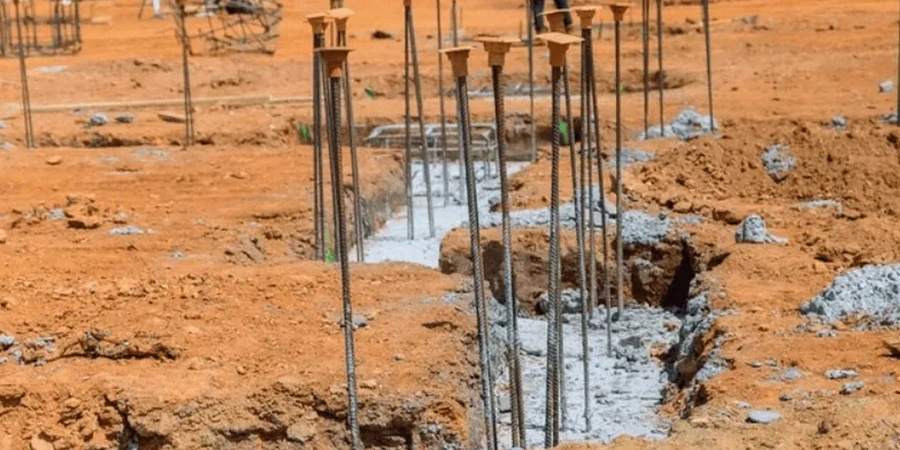
A scheme of three-story flats on a brownfield site off the A28 ran into problems when the trial pits exposed soft clay lenses at 2.5 m depth. The initial design assumed a stiff clay bearing stratum, but the soil mechanics study revealed a pocket of reworked material with Su below 40 kPa. That forced a switch from pad footings to a raft foundation. In Ashford, old brickearth pits and backfilled ponds are common near the town centre. Without a targeted lab programme, you miss these soft spots. The biggest risk we see is differential settlement when one half of a building sits on undisturbed Hythe Beds and the other half on compressible fill. Correct sampling and triaxial testing prevent that scenario.

Typical values

ParameterTypical value
Undrained shear strength (Su)Triaxial UU / CIU, BS 1377-7
Effective cohesion (c')CIU with pore pressure, BS EN 1997-2
Effective friction (φ')CIU, multi-stage, Mohr-Coulomb envelope
Oedometric modulus (Eoed)BS 1377-5, incremental loading
Soil classificationBS 5930:2015, full description
Atterberg limitsBS 1377-2, fall cone method
Moisture content profileOven drying at 105 °C, depth-matched

Frequently asked questions

How long does a soil mechanics study take for an Ashford site?

The laboratory phase typically takes three to four weeks after we receive the samples. This includes triaxial consolidation and shear stages, oedometer loading increments, and the full classification suite. The interpretive report adds another week. We coordinate with the drilling crew so samples arrive within 24 hours of extraction, which keeps the moisture condition intact.

What is the cost range for a soil mechanics study in Ashford?

For a residential plot with one borehole and a full lab package, the cost ranges from £2,840 to £4,600. The final figure depends on the number of triaxial tests, the depth of the investigation, and whether chemical tests are required. We provide a fixed quote after reviewing the site location and the proposed foundation type.

Which Ashford soil layers cause the most problems for foundations?

The Weald Clay is the main challenge. It is heavily overconsolidated but fissured, so the mass strength is lower than the intact sample strength. The Gault Clay, found east of Ashford, is also problematic due to its high sulphate content. Both require careful sampling and laboratory testing to get representative design parameters.

Location and service area

We serve projects across Ashford and surrounding areas.

View larger map