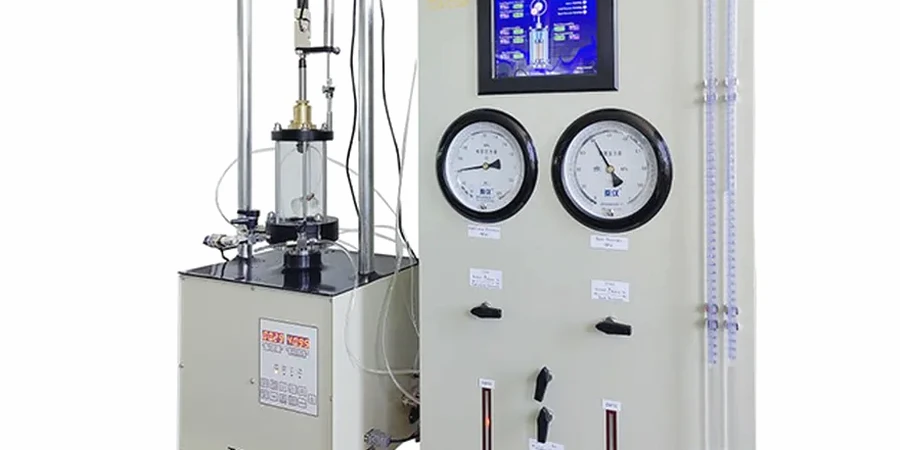
Geotechnical laboratory testing forms the backbone of any safe and economical construction project in Ashford, providing the physical evidence needed to validate ground conditions and refine engineering designs. This category encompasses the precise measurement of soil and rock properties, from basic classification to advanced strength and compressibility assessments. In Ashford, where development ranges from the expanding residential estates of Singleton and Finberry to major infrastructure works along the M20 corridor, reliable laboratory data is not just a regulatory requirement—it is the critical link between site investigation and foundation design. Without it, ground risks remain hidden, leading to costly over-engineering or, worse, structural failure.
Ashford's underlying geology presents a varied and sometimes challenging profile that demands careful laboratory characterisation. The town sits predominantly on the Lower Greensand Formation of the Hythe Beds—a variable mix of sandy and silty soils with occasional ragstone bands—overlain in many areas by Weald Clay and extensive Quaternary river terrace gravels from the River Stour. These deposits can exhibit unpredictable behaviour, including clay shrinkage-swelling potential and variable bearing capacity. Alluvial silts in the Stour floodplain also raise concerns about compressibility and liquefaction risk. A thorough laboratory testing programme, including grain size analysis to quantify the silt and clay fractions, is essential to distinguish these materials and predict their engineering response accurately.
In the United Kingdom, all geotechnical laboratory work must comply with the stringent technical standards set out in BS 1377 (Methods of test for soils for civil engineering purposes) and BS EN ISO 17892 (Geotechnical investigation and testing – Laboratory testing of soil). These standards dictate every aspect of sample preparation, testing apparatus calibration, and result reporting, ensuring consistency and legal defensibility. For projects in Ashford, adherence to these norms is mandatory under the National House Building Council (NHBC) standards for residential development and the Specification for Highway Works for road infrastructure. The second-generation Eurocode 7 (BS EN 1997-2) further mandates that the selection and execution of laboratory tests be directly informed by the ground model derived from the desk study and ground investigation, reinforcing the need for an integrated approach.
The scope of testing required varies significantly by project type, but the category serves a universal need across Ashford's construction landscape. Low-rise housing developments on the clay-rich Weald Clay outcrops routinely require Atterberg limits testing to assess volume change potential and inform foundation depth decisions to mitigate heave and subsidence. Larger commercial builds and highway embankments near Junction 9 and 10 depend on compaction and shear strength tests for earthworks specification. Meanwhile, the redevelopment of brownfield sites in the town centre often triggers chemical testing suites for contamination, alongside standard physical testing. From a small house extension to a multi-storey block, the laboratory delivers the material parameters—cohesion, friction angle, consolidation coefficients—that structural engineers rely upon.
The site investigation provides soil samples and field data, but laboratory testing is required to measure the material's fundamental engineering properties—such as strength, compressibility, and plasticity—under controlled conditions. This quantitative data is essential for foundation design calculations and to meet UK standards like BS EN 1997-2, ensuring the ground model is verified and safe.
The primary standards are BS 1377 and BS EN ISO 17892, which specify methods for soil classification, strength, and consolidation tests. These are mandated by the NHBC for new homes and the Specification for Highway Works for roads. Eurocode 7 (BS EN 1997-2) also requires that the laboratory testing programme be designed to verify the ground investigation's findings.
Ashford's geology includes Weald Clay, known for its shrink-swell behaviour, and river gravels with silty lenses. This variability makes classification tests like particle size distribution and Atterberg limits critical for identifying problematic soils. A tailored test schedule is needed to assess specific risks such as clay heave, variable foundation bearing capacity, or potential for settlement in alluvial zones.
Virtually all permanent structures require some level of testing, but a full suite is essential for residential estates, multi-storey buildings, highway embankments, and brownfield redevelopments. Any project requiring formal foundation design, earthworks specification, or regulatory approval from bodies like the NHBC or Kent County Council will depend on comprehensive laboratory data to validate the ground conditions.