GEOTECHNICAL ENGINEERING1
ASHFORD
HomeLaboratoryLaboratory CBR test

Laboratory CBR Testing for Road & Pavement Design in Ashford

Knowledgeable. Thorough. Resourceful.

LEARN MORE

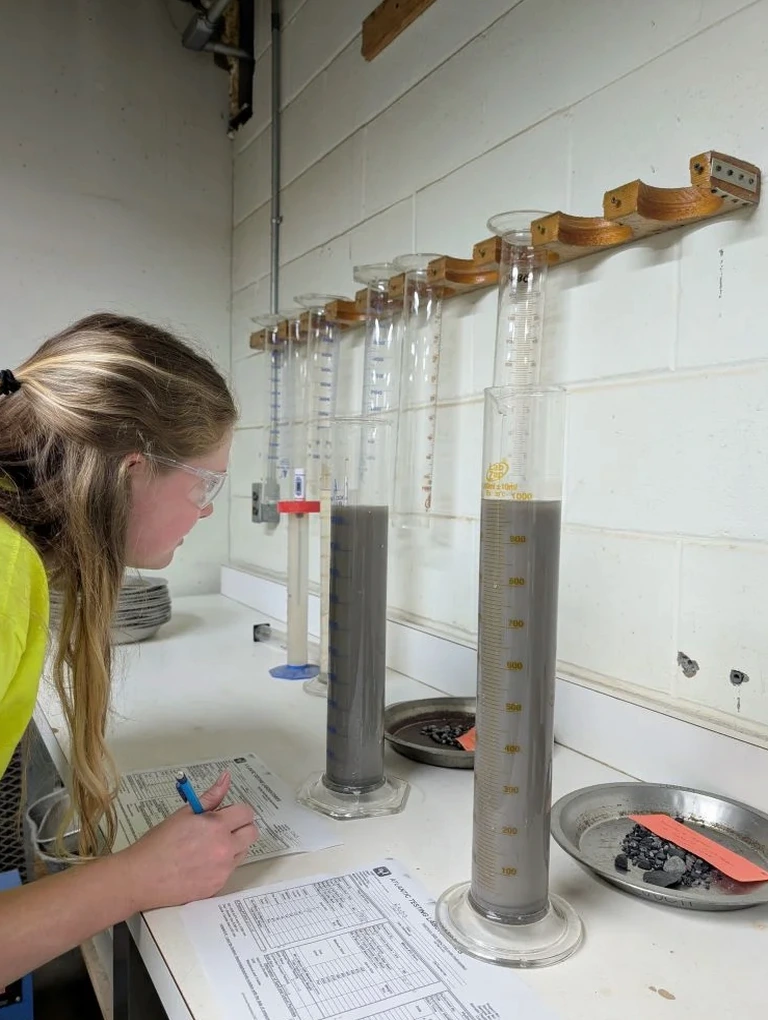
Ashford’s growth from a market town to a major transport hub hasn’t been kind to its subgrades. The High Speed 1 corridor and successive housing expansions have churned up Weald Clay and river terrace gravels in ways that make pavement design unpredictable without proper lab data. We run the CBR test on remoulded samples at optimum moisture content, giving you a direct input for thickness design. When the subgrade varies metre by metre—common near the Stour floodplain—a single assumed CBR value can wreck a pavement section within two winters. Our lab on the M20 corridor processes specimens at standard Proctor energy and soaked condition, matching the worst-case scenario Kent County Council expects.

A soaked CBR of 2% versus 5% can double the asphalt thickness required. That’s a six-figure difference on a 500-metre Ashford access road.
Our service areas

Scope of work

Ashford sits at roughly 50 metres above Ordnance Datum, but the real story is below ground. The Lower Greensand outcrops south of town while the Weald Clay dominates north of the M20, and CBR values can swing from 2% to 15% across a single estate road. We test at BS 1377-4:1990 compaction effort—usually 62 blows per layer for the heavy mould—and soak for 96 hours to simulate long-term saturation. The plunger penetration rate is held at 1.27 mm/min, and we read at 2.5 mm and 5.0 mm penetration. If the 5.0 mm value exceeds the 2.5 mm value, we repeat the test; that’s not optional, it’s the standard. For Ashford’s silty clays, the soaked value often drops to less than half the unsoaked figure, which is why we pair CBR with grain-size analysis to confirm the fines fraction driving the sensitivity.
Laboratory CBR Testing for Road & Pavement Design in Ashford
Technical reference — Ashford

Area-specific notes

The most common mistake we see in Ashford is contractors accepting a single CBR value from a trial pit at formation level and applying it across the whole site. Weald Clay swells and shrinks seasonally; a dry August sample can read 12% and drop to 3% by February. If you design your capping layer and sub-base on the summer figure, the pavement fails within the first wet season. The other error is ignoring the surcharge requirement during soaking—without the 4.5 kg annular weights, the top of the specimen heaves and the plunger reads artificially low resistance. We’ve had developers bring in third-party results that looked fine on paper until we spotted the missing surcharge and the lab had to re-run eight specimens. On Ashford’s clay sites, we recommend at least one CBR test per 200 m² of formation, not one per site.

Need a geotechnical assessment?

Reply within 24h.

Email: contact@geotechnical-engineering1.com

Standards used


BS 1377-4:1990, BS EN 1997-2:2007 (Eurocode 7), IAN 73/06 (Design Manual for Roads and Bridges)

Typical values

ParameterTypical value
StandardBS 1377-4:1990
Mould typeCBR mould, 152 mm diameter
Compaction effortHeavy (4.5 kg rammer, 62 blows/layer)
Soaking period96 hours submerged
Penetration rate1.27 mm/min
Surcharge weight4.5 kg annular discs
Typical Ashford range2–15% soaked CBR
Report outputLoad-penetration curve + corrected CBR

Frequently asked questions


How much does a laboratory CBR test cost in Ashford?

A single-point CBR test—compacted, soaked, and penetrated—runs between £100 and £180 depending on specimen count and whether you need the Proctor compaction curve determined first. A full suite for a small residential site with five test points typically falls in the lower end of that range per sample. We quote fixed-price per specimen so there are no surprises when the invoice lands.

How many CBR samples do we need for a road in Ashford?

For flexible pavement design under Kent County Council adoption, we recommend one soaked CBR test per distinct soil type encountered, with a minimum of three tests per 500 m of road alignment. If the formation exposes both Weald Clay and river gravels, you need separate determinations for each material. The Design Manual for Roads and Bridges suggests a minimum of one test per 200 m² of formation on variable ground.

Why does the CBR value drop so much after soaking?

Ashford’s Weald Clay contains a significant fraction of smectite and illite clay minerals that absorb water into their crystal lattice. When the specimen is submerged for 96 hours, these minerals swell, reducing the effective inter-particle friction and softening the soil matrix. The plunger then records lower resistance at the standard penetrations. This soaked value represents the pavement’s weakest condition—typically late winter when the water table is high.

Do you test in-situ CBR or only in the laboratory?

We run the laboratory CBR test because UK pavement design is calibrated against BS 1377-4 soaked values, not field CBR. That said, we also perform DCP testing on site and can correlate the penetration index to lab CBR using established conversion charts. The lab test remains the reference method for deriving the subgrade modulus used in capping and sub-base thickness calculations.

Location and service area

We serve projects across Ashford and surrounding areas.

View larger map