Seismic engineering in Ashford represents a comprehensive discipline focused on protecting structures, infrastructure, and communities from the potentially devastating effects of earthquake ground motions. While the United Kingdom is not typically associated with high seismicity, Ashford and the wider Kent region are subject to low to moderate seismic hazards that demand careful consideration in modern construction and urban planning. This category encompasses the full spectrum of earthquake-resistant design and assessment services, from site-specific hazard evaluations to advanced structural mitigation strategies. Understanding and addressing seismic risk is not merely a matter of regulatory compliance but a fundamental aspect of responsible engineering that safeguards lives and investments over the long term.
The geological context of Ashford plays a pivotal role in shaping its seismic response characteristics. The town sits on a varied substrate that includes the Weald Clay Formation, Lower Greensand Group, and superficial deposits of alluvium and river terrace gravels along the Great Stour corridor. These soft, unconsolidated sediments are particularly susceptible to ground motion amplification during seismic events, a phenomenon that can significantly increase the shaking intensity experienced by buildings compared to nearby rock sites. Furthermore, the presence of saturated granular soils in low-lying areas raises legitimate concerns about soil liquefaction analysis, a critical service that evaluates the potential for soils to lose strength and behave like a liquid under cyclic loading. Such site conditions necessitate a thorough understanding of local ground behaviour to inform safe and resilient design.
The regulatory framework governing seismic design in the United Kingdom is anchored in the British Standards Institution's BS EN 1998-1:2004, commonly known as Eurocode 8, which provides the overarching principles for earthquake-resistant structures. This is supplemented by the UK National Annex, which tailors the general European provisions to the specific seismotectonic conditions of the British Isles. For Ashford, designers must reference the UK seismic hazard maps that define the reference peak ground acceleration for a 475-year return period, typically falling within the 0.02g to 0.04g range for this part of Kent. Compliance with these standards is mandatory for safety-critical structures such as hospitals, schools, and emergency response facilities, but they are increasingly being applied to major commercial and residential developments where resilience and insurability are key considerations.
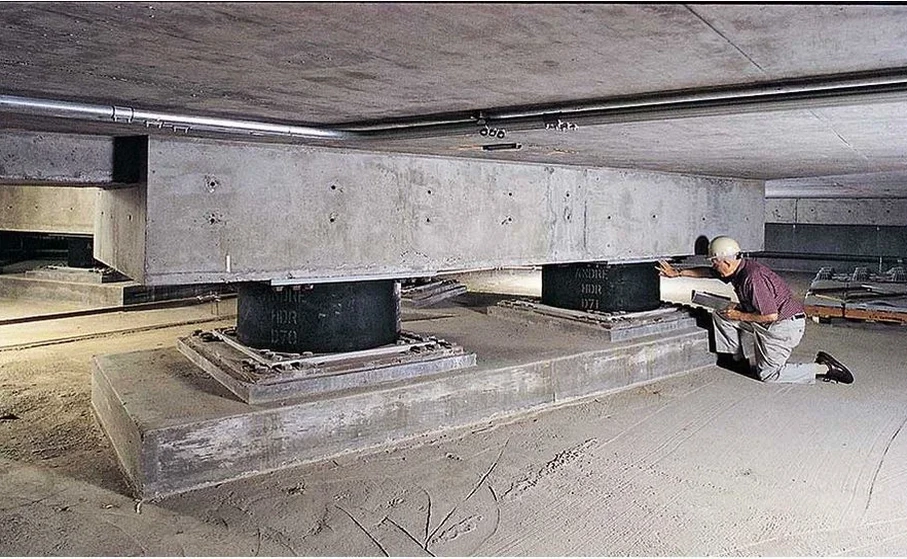
A diverse range of projects in Ashford require specialist seismic input to meet both regulatory requirements and best practice standards. High-rise residential towers, such as those emerging near Ashford International station, demand detailed dynamic analysis to account for their fundamental period and potential resonance effects. Critical infrastructure including bridges, water treatment plants, and energy facilities must undergo rigorous seismic performance assessments to ensure post-earthquake functionality. Even low-rise structures on problematic ground can benefit from advanced techniques like base isolation seismic design, which decouples the superstructure from ground motion to dramatically reduce seismic forces. For larger development masterplans, a seismic microzonation study provides the essential spatial mapping of hazard parameters that guides land-use decisions and foundation design across an entire site.
Yes, Ashford is located in a region of low to moderate seismicity. The UK experiences hundreds of minor earthquakes annually, with the Dover Straits area historically generating events up to magnitude 4.5. While damaging earthquakes are rare, the local soft clay and alluvial soils can amplify ground shaking, making seismic considerations important for certain building types and critical infrastructure to ensure long-term safety and compliance with Eurocode 8.
Seismic assessments are mandated for structures in Importance Class II, III, and IV under Eurocode 8, which includes schools, hospitals, emergency services buildings, large residential blocks, and major transport infrastructure. In Ashford, any building over 15 metres in height, structures with irregular configurations, or those founded on potentially liquefiable soils also benefit significantly from a detailed seismic evaluation to manage disproportionate collapse risks.
Ashford's geology, particularly the Weald Clay and river terrace gravels, can modify earthquake ground motions. Soft clay deposits tend to amplify long-period shaking, affecting taller, more flexible structures, while loose, water-saturated sands and silts in the Stour valley are susceptible to liquefaction. A site-specific ground investigation is essential to classify the soil profile and determine the appropriate seismic design parameters for a project.
A standard site investigation focuses on a single plot to determine soil bearing capacity and composition. In contrast, a seismic microzonation study maps the spatial variation of ground shaking potential, liquefaction susceptibility, and landslide risk across a broader area, such as a large development masterplan. It integrates geophysical surveys, borehole data, and dynamic analysis to produce hazard maps that inform land-use planning and foundation design for multiple structures.