GEOTECHNICAL ENGINEERING1
ASHFORD
HomeImprovementStone column design

Stone Column Design in Ashford – Improvement on Soft Alluvial Soils

Knowledgeable. Thorough. Resourceful.

LEARN MORE

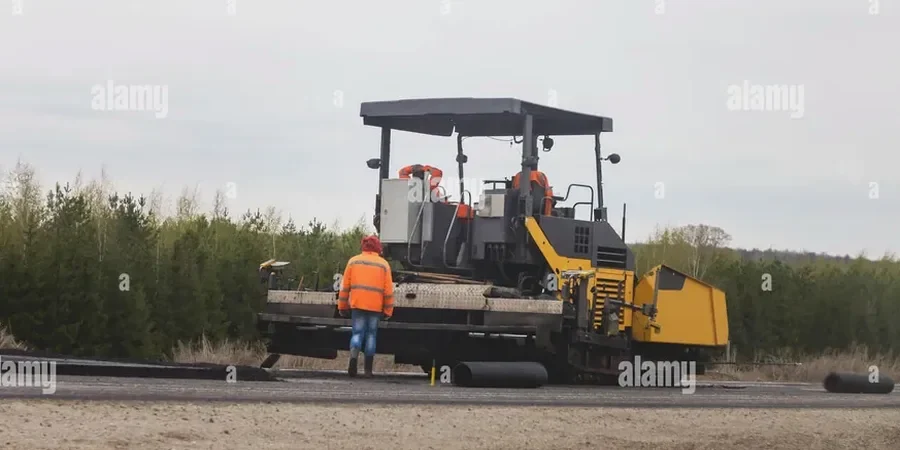
A common mistake in Ashford is treating the superficial Head deposits like competent bearing strata. We see it all the time: a site investigation stops at two metres, the clay feels stiff, and the structural engineer assumes a modest allowable bearing pressure. Then the structure settles. The real problem lies deeper, in the soft alluvial silts and clays of the Stour river terrace that blanket much of the town centre south of the railway. When the upper crust is thin and the compressible layer extends to depth, a conventional footing becomes uneconomical. Stone column design shifts the logic: instead of removing the problem, you reinforce it. By installing compacted granular columns on a regular grid, the composite ground mass gains stiffness and drains rapidly during consolidation. For sites near the International Truckstop or the expanding Eureka Park industrial area, we combine the column layout with a vibrocompaction assessment to target the loose granular lenses that sometimes sit above the Gault clay.

In Ashford's river terrace silts, a well-designed stone column grid typically accelerates primary consolidation by a factor of 10 to 40 compared to untreated ground.
Our service areas

Scope of work

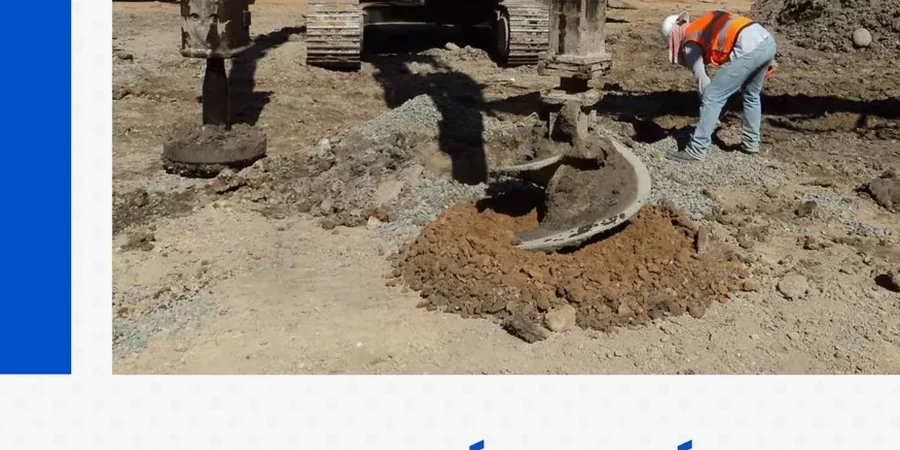
Ashford sits on a varied Quaternary sequence. The northern suburbs climb onto the Hythe Beds of the Lower Greensand, where drainage is sharp and the sand can be dense. But south of the M20, the landscape flattens into alluvial meadows with groundwater often within 1.5 m of the surface. This contrast means that Improvement requirements change abruptly across town. In the soft zone, a typical stone column design targets a replacement ratio between 15% and 35%, using 600 mm to 900 mm diameter columns installed by wet top-feed vibroflot. The column length must penetrate the full compressible sequence and socket at least 0.5 m into the underlying stiff clay or dense sand to prevent a punching failure. Our field team runs pre-production trials to calibrate the vibrator amperage against the CPT tip resistance, ensuring the column diameter is achieved without excessive spoil. Every grid is verified against BS EN 14731:2005 execution tolerances, and we track column verticality with inclinometer readings taken during installation.
Stone Column Design in Ashford – Improvement on Soft Alluvial Soils
Technical reference — Ashford

Area-specific notes

BS EN 1997-1:2004 Section 6 requires that Improvement designs be verified by post-treatment testing. In Ashford, this is not a box-ticking exercise. The soft alluvial clays exhibit sensitivity, meaning that excessive vibration during column installation can temporarily remould the soil and reduce its undrained shear strength. If the grid spacing is too tight, pore pressure build-up between columns can delay the strength regain and compromise the design assumption of a stiffened composite block. We manage this risk by specifying staggered installation sequences and monitoring pore pressures with standpipe piezometers during the trial phase. A further risk is differential settlement at the transition between treated and untreated zones, a common detail at the perimeter of warehouse slabs in Ashford's commercial estates. We mitigate this by tapering the column length and spacing over a transition strip typically 3 m to 5 m wide, confirmed by finite element settlement profiles.

Need a geotechnical assessment?

Reply within 24h.

Email: contact@geotechnical-engineering1.com

Standards used


BS EN 1997-1:2004 (Eurocode 7: Geotechnical design), BS EN 14731:2005 (Execution of special geotechnical works – Ground treatment by deep vibration), BS 5930:2015 (Code of practice for ground investigations), ICE Specification for Ground Treatment (2012)

Typical values

ParameterTypical value
Typical treatment depth in Ashford alluvium4 m to 12 m
Column diameter range (wet top-feed)600 mm to 900 mm
Area replacement ratio (ar)0.15 to 0.35
Post-treatment allowable bearing pressure100 kPa to 250 kPa
Settlement reduction factor (n)2.0 to 4.0
Column modulus (E_col)40 MPa to 100 MPa
Groundwater depth south Ashford0.8 m to 2.0 m bgl

Frequently asked questions


What is the typical cost range for a stone column design package in Ashford?

For sites in the Ashford area, a complete design package including desk study, parameter derivation, trial panel specification, and construction drawings typically falls between £1,080 and £4,350. The spread depends on site complexity, number of CPT soundings to interpret, and whether a full FEM back-analysis of the trial panel is required.

How close to existing structures can stone columns be installed in Ashford's urban areas?

In built-up areas like the town centre or near the railway viaduct, we normally maintain a minimum offset of 2.5 m from existing foundations. When the distance is tighter, we pre-drill through the superficial crust to reduce lateral vibration amplitude and monitor peak particle velocity with geophones set to a 5 mm/s threshold.

What stone specification is required for vibro-replacement in soft Ashford clays?

We specify a clean, hard, angular aggregate with a grading of 40 mm to 75 mm and a Los Angeles abrasion value below 35. The material must be free of fines to ensure high permeability within the column, which is critical for accelerating radial drainage in the low-permeability alluvial silts common south of the M20.

How is the performance of stone columns verified after installation?

Verification follows the ICE Specification for Ground Treatment. We carry out post-treatment CPTs at the centroid of the column grid and between columns at a frequency of one test per 400 m² of treated area. Additionally, plate load tests on single columns confirm the modulus of the composite ground, and we compare the measured settlement under load to the Priebe method prediction.

Location and service area

We serve projects across Ashford and surrounding areas.

View larger map
ooter>