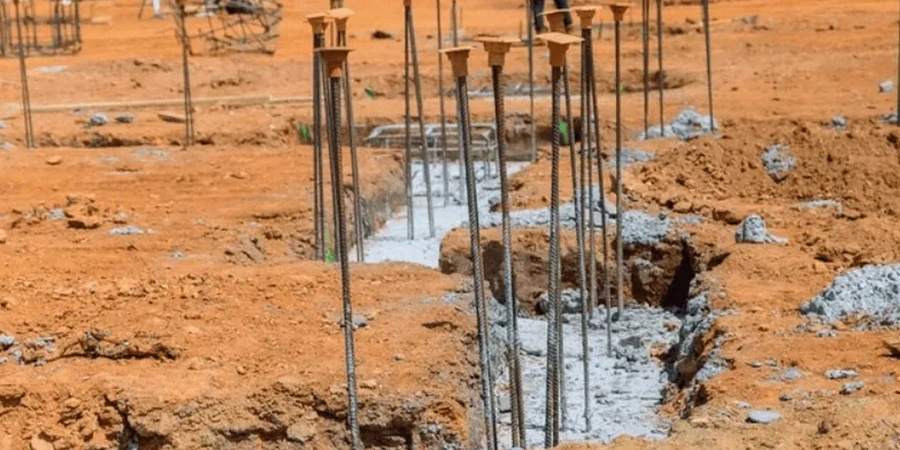
Foundations represent the most critical structural element in any construction project, serving as the essential interface between a building and the ground beneath it. In Ashford, Kent, the significance of proper foundation design cannot be overstated given the town's continued expansion as a key growth area in the South East, with major residential developments, commercial schemes, and infrastructure upgrades transforming the local landscape. Whether supporting a modest house extension in Willesborough or anchoring a multi-storey apartment complex in the town centre, foundations must be engineered to safely transfer structural loads to competent bearing strata while accommodating the specific ground conditions encountered across the borough. This category encompasses the full spectrum of foundation solutions, from traditional strip footings and trench fill to more advanced techniques such as pile foundation design, each selected based on rigorous site investigation and structural requirements.
Ashford's underlying geology plays a decisive role in foundation selection and performance. The town sits predominantly on the Weald Clay Formation, a stiff overconsolidated clay that can exhibit significant volume changes with seasonal moisture variation, presenting a moderate to high shrink-swell potential that must be carefully managed. Overlying much of this clay are superficial deposits including river terrace gravels along the Stour Valley, Head deposits on valley slopes, and localised alluvium in floodplain areas, creating a complex patchwork of ground conditions that can vary considerably even across a single site. The Hythe Beds of the Lower Greensand Formation emerge to the north of Ashford, offering more competent sandy strata, while the chalk of the North Downs provides excellent bearing capacity at depth. Understanding this geological mosaic is fundamental to designing foundations that mitigate differential settlement and long-term serviceability issues.
All foundation works in Ashford must comply with the relevant British Standards and Building Regulations, principally Approved Document A (Structure) of the Building Regulations 2010, which sets out the legal requirements for structural stability. The design and execution of foundations are governed by Eurocode 7 (BS EN 1997: Geotechnical Design) and its UK National Annex, alongside BS 8004:2015 for concrete foundations and BS 8002:2015 for earth retaining structures. Ground investigation should follow BS 5930:2015, while NHBC Standards Chapter 4 provides additional requirements for residential developments covered by warranty schemes. Ashford Borough Council's Building Control service enforces these regulations locally, and developers must also consider the Kent Minerals and Waste Local Plan where deeper excavations might encounter mineral resources. Compliance with the Party Wall etc. Act 1996 is mandatory where foundations are excavated within three metres of an adjoining owner's property.
The types of projects requiring professional foundation design in Ashford are remarkably diverse, reflecting the town's role as a regional growth hub. Large-scale residential developments such as those at Chilmington Green and Finberry demand comprehensive foundation strategies to accommodate hundreds of dwellings on greenfield sites with varying ground profiles. Commercial and industrial schemes, including the expanding Eureka Business Park and Ashford Commercial Quarter, frequently require pile foundation design to support heavy floor loadings or bridge soft alluvial deposits. Infrastructure projects, such as the M20 junction improvements and rail network upgrades associated with Ashford International Station, present unique challenges where foundations must resist dynamic loading and strict settlement tolerances. Even smaller domestic projects, from loft conversions requiring underpinning to garden annexes on sloping sites, benefit from tailored foundation solutions that account for Ashford's specific geotechnical context. Historic buildings within the Conservation Area often necessitate sensitive underpinning or mini-pile installations to preserve heritage fabric while meeting modern stability standards.
Foundation types in Ashford range from shallow strip footings and raft slabs to deep pile foundations, with selection driven by the underlying geology. The Weald Clay's shrink-swell potential often necessitates deeper trench fill or piled solutions to reach stable strata, while gravel terraces may permit conventional strip footings. Ground investigation reports determine bearing capacity, settlement potential, and groundwater conditions, guiding engineers toward the most appropriate and cost-effective foundation system for each specific site.
Yes, a ground investigation is essential and typically required under Building Regulations and Eurocode 7. It involves trial pits, boreholes, or in-situ testing to characterise soil properties, identify hazards such as made ground or alluvium, and determine bearing strata depth. In Ashford, where ground conditions can change abruptly due to superficial deposits overlying Weald Clay, skipping this step risks inadequate foundation design, leading to differential settlement, cracking, and costly remedial works.
Foundation depth depends on site-specific conditions, but a minimum of 1.0 metre is common in Ashford to avoid frost penetration and seasonal moisture effects in the Weald Clay. However, where trees are present or have been removed, depths may need to increase to 1.5 metres or more to account for desiccation and shrinkage, following NHBC guidance. Deeper piles may be required where competent bearing strata are not found at shallow depths, particularly in alluvial areas near the River Stour.
Foundation works must comply with Building Regulations Approved Document A, Eurocode 7, and relevant British Standards such as BS 8004. Building Control approval from Ashford Borough Council is mandatory for most projects, requiring submission of structural calculations and ground investigation data. NHBC Standards apply to new homes with warranty cover, and the Party Wall Act may require notices for excavations near neighbouring properties. Compliance ensures structural safety and avoids enforcement action.