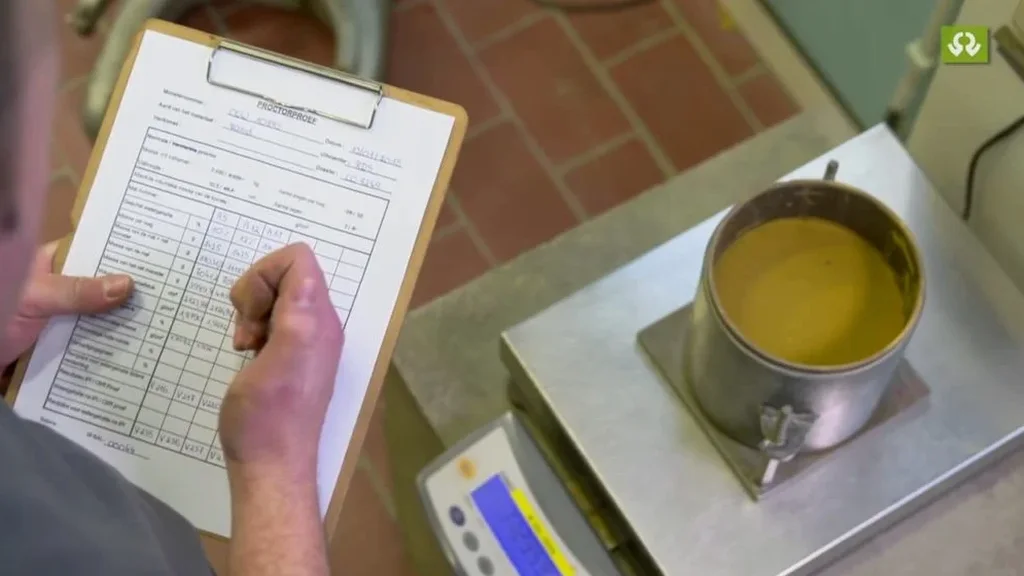
Ground investigation in Ashford forms the critical first step in any construction or civil engineering project, providing essential data on the physical, chemical, and mechanical properties of the underlying ground. This category encompasses a comprehensive suite of intrusive and non-intrusive techniques designed to de-risk development, inform foundation design, and ensure long-term structural stability. From detailed soil and rock sampling to in-situ testing and groundwater monitoring, a robust investigation strategy is not merely a regulatory formality but a fundamental engineering necessity. In a town experiencing significant residential and commercial expansion, understanding the ground conditions is paramount to delivering safe, sustainable, and cost-effective projects.
The local geology of Ashford presents a varied and sometimes challenging landscape for developers and geotechnical engineers. Much of the urban area is underlain by the Weald Clay Formation, a stiff, overconsolidated clay that can exhibit significant shrink-swell behaviour with seasonal moisture changes, posing a risk to shallow foundations. Superficial deposits, including river terrace gravels associated with the River Great Stour and its tributaries, offer better bearing capacities but can be highly variable in thickness. Head deposits and alluvium in valley bottoms can be soft and compressible, requiring careful assessment. A thorough understanding of this geological sequence, including the potential for dissolution features in underlying chalk formations further north, is critical for accurate ground modelling and foundation design.
All ground investigation work in the UK, and specifically in Ashford, must be conducted in strict accordance with the relevant British Standards, most notably BS 5930:2015+A1:2020, the code of practice for ground investigations. This standard governs the planning, execution, and reporting of investigations. For contaminated land assessments, which are a common requirement given Ashford's industrial heritage and railway works, the Environment Agency's Land Contamination Risk Management (LCRM) framework provides the regulatory guidance. Furthermore, any investigation involving trial pitting, borehole drilling, or in-situ testing like a CPT test must adhere to health and safety regulations, including the avoidance of underground services in line with PAS 128 specifications. The resulting factual and interpretative reports must be of a quality suitable for submission to the local building control authority and the National House Building Council (NHBC) for warranty purposes.
The requirement for a comprehensive ground investigation in Ashford spans a wide spectrum of project types. Large-scale residential developments on greenfield sites demand a detailed assessment of ground conditions for foundation design, road construction, and soakaway drainage testing. Brownfield redevelopments, such as the repurposing of former industrial or railway land in the town centre, necessitate a combined geotechnical and geo-environmental investigation to characterise both physical hazards and chemical contamination. Infrastructure projects, commercial building extensions, and even smaller domestic schemes where trees influence clay soils all trigger the need for an investigation. A CPT test is often the preferred method for profiling soft alluvial soils and assessing liquefaction potential, providing a rapid and continuous data stream that complements traditional borehole techniques.
A ground investigation is essential to de-risk your project by identifying the specific soil and groundwater conditions beneath your site. In Ashford, the prevalence of Weald Clay, which shrinks and swells with moisture changes, can cause significant foundation movement. An investigation provides the data needed to design foundations that are safe, compliant with building regulations, and suitable for the local ground conditions, preventing future structural defects.
A comprehensive investigation typically follows a phased approach. It begins with a desk study to review historical maps, geological data, and environmental records. This is followed by an intrusive investigation, which may involve trial pits, cable percussive boreholes, or cone penetration tests to physically sample and test the ground. The final stage is laboratory testing and the production of an interpretative report with engineering recommendations.
The primary standard is BS 5930:2015+A1:2020, the Code of Practice for Ground Investigations, which dictates best practice for planning and executing the work. For projects involving potentially contaminated land, the Environment Agency's Land Contamination Risk Management (LCRM) guidance applies. All site work must also comply with health and safety legislation, particularly the Construction (Design and Management) Regulations 2015 (CDM).
The required depth depends on the proposed foundation type and the local geology, but a typical investigation for a shallow foundation on the Weald Clay would likely extend to a minimum of 3 to 5 metres below ground level. The investigation must probe deeper than the zone of influence of the foundation, and any significant seasonal moisture change. A specialist will design the exploration depth based on the specific loads and the findings of the initial desk study.