GEOTECHNICAL ENGINEERING1
ASHFORD
HomeInvestigationSPT (Standard Penetration Test)

SPT (Standard Penetration Test) in Ashford – BS 5930 Compliant

Knowledgeable. Thorough. Resourceful.

LEARN MORE

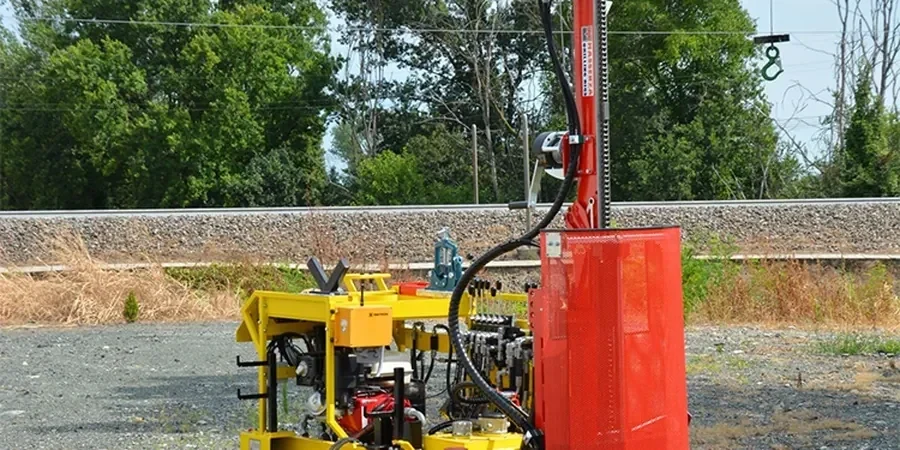
In Ashford, the mix of Weald Clay, Hythe Beds sand, and occasional river terrace gravels means one borehole never tells the full story. Many sites near the M20 corridor we have seen look solid at surface but show loose saturated sands at 4 to 6 metres. That sand layer governs foundation settlement and drainage design. Our SPT (Standard Penetration Test) service is run as part of a wider ground investigation, with tracked rigs that can access tight plots behind the town centre redevelopment areas. The test follows BS 5930:2015, recording N-values every 1.5 metres or at stratum change. For sites near the Great Stour floodplain, combining SPT data with in-situ permeability tests helps us quantify groundwater flow before excavation starts.

An SPT N-value below 10 in Ashford's river terrace sands changes the foundation solution from a pad to piled—ignoring it costs weeks of redesign later.
Our service areas

Scope of work

A common mistake we see in Ashford is using assumed bearing values from desk studies without verifying the sand lenses. Hythe Beds can be highly variable, with cemented bands that give misleading refusal on a light dynamic probe. The SPT sampler drives through these layers with a calibrated 63.5 kg hammer, giving a true measure of density. We log the split-spoon recovery, note any water ingress, and bag samples for laboratory index testing. When the N-value drops below 12 in silty sand, we cross-check with CPT testing to rule out liquefiable layers—critical now that Annex B of BS EN 1998-5 applies to seismic risk even in the South East.
SPT (Standard Penetration Test) in Ashford – BS 5930 Compliant
Technical reference — Ashford

Area-specific notes

BS EN 1997-2 Section 3.4 requires that the number of boreholes and SPT tests be sufficient to capture lateral variability. Ashford’s geological map shows Weald Clay outcrops crossing the A28 corridor, but site-specific drift deposits—head, brickearth, or alluvium—can appear over short distances. A geotechnical investigation relying on sparse tests risks missing a soft clay lens beneath a proposed raft. The failure mode is differential settlement, and the remediation cost after construction far exceeds the investigation budget. We space SPT boreholes at 15–25 metres for linear infrastructure and tighter for variable ground. Each test provides both a strength index and a disturbed sample for visual classification, reducing the chance of misidentifying a layer that the driller calls “firm clay” but is actually a desiccated crust over soft alluvium.

Need a geotechnical assessment?

Reply within 24h.

Email: contact@geotechnical-engineering1.com

Standards used


BS 5930:2015 – Code of practice for ground investigations, BS EN 1997-2:2007 (Eurocode 7) – Ground investigation and testing, BS EN ISO 22476-3:2005 – Standard penetration test, BS EN 1998-5:2004 – Seismic design (Annex B, liquefaction)

Typical values

ParameterTypical value
Hammer typeAutomatic trip, 63.5 kg mass, 760 mm drop
Borehole diameter100–150 mm (BS 5930 compliant)
Sampling interval1.5 m or at stratum boundary
Energy ratio (Er)Reported with N60 correction
Reporting standardBS EN 1997-2 and BS 5930:2015
Sample recoverySplit-spoon, logged per ISO 14688
DeploymentTracked rigs, minimum 1.8 m access width

Frequently asked questions


How much does an SPT borehole cost in Ashford?

For a single borehole to 10 metres depth with SPT at standard intervals, budget between £430 and £680. The final cost depends on access, traffic management if working on a public road, and the number of samples requiring laboratory testing. A campaign of three to four boreholes typically reduces the per-metre rate.

How many SPT boreholes does BS 5930 require?

BS 5930 does not prescribe a fixed number; it depends on the site’s geotechnical category and the uniformity of the ground. For a Category 2 structure on Ashford’s variable Weald Clay and Hythe Beds, we usually recommend a minimum of three boreholes spaced to capture lateral changes.

What is the difference between SPT N-value and N60?

The raw SPT N-value is the blow count recorded in the field. N60 corrects that raw number to 60% of the theoretical hammer energy, accounting for rod length, borehole diameter, and sampler type. Our automatic trip hammers are calibrated for energy ratio, and we report both raw N and N60 on the borehole log so the structural engineer can select appropriate design parameters.

Can you do SPT testing inside an existing building in Ashford?

Yes, but it depends on headroom and access width. We have compact tracked rigs that fit through a standard door opening when required. For very restricted spaces, we may recommend a CPT instead, which uses a smaller rig footprint and still provides continuous penetration resistance.

How long does it take to get the SPT report?

Fieldwork for a typical three-borehole campaign in Ashford takes one to two days. Laboratory testing adds five working days. The final factual report, including borehole logs, N-values, and laboratory results, is delivered within ten working days of completing fieldwork.

Location and service area

We serve projects across Ashford and surrounding areas.

View larger map